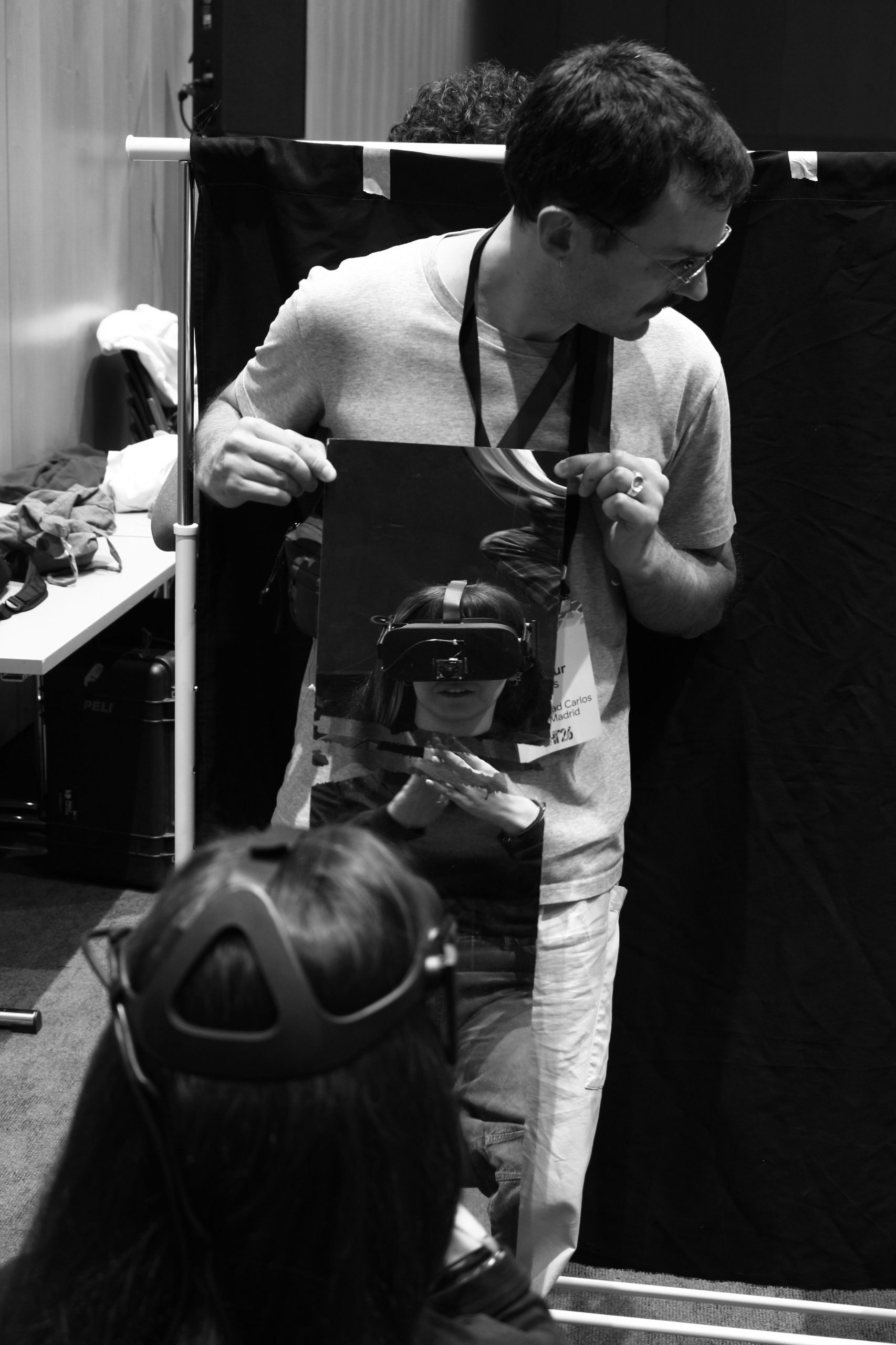
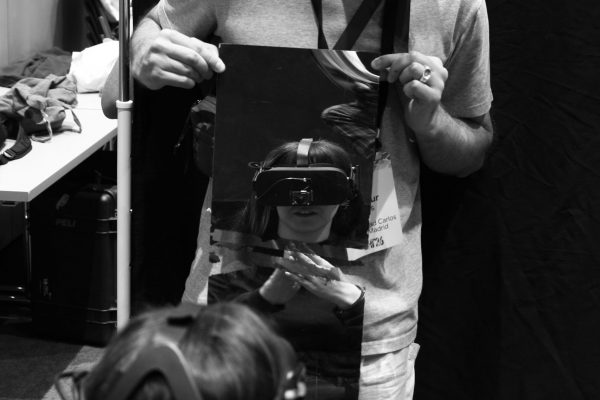
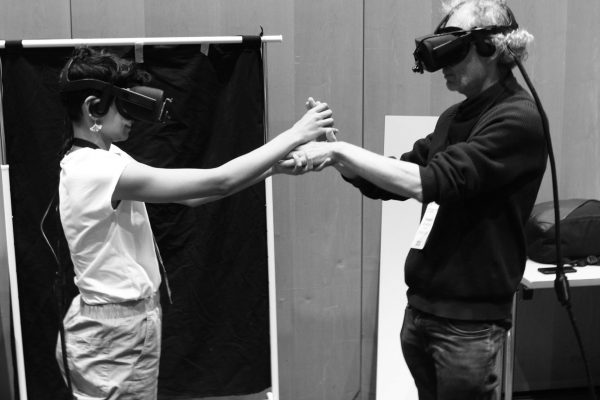
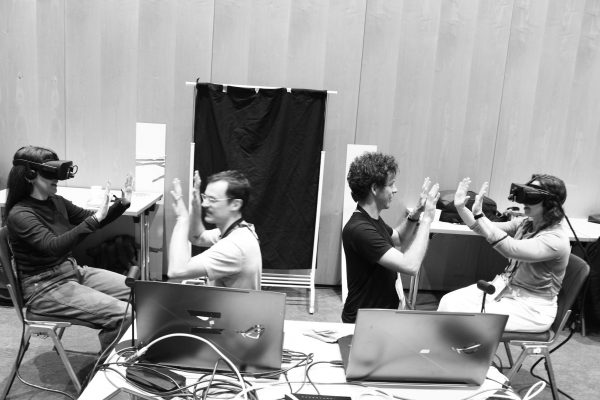
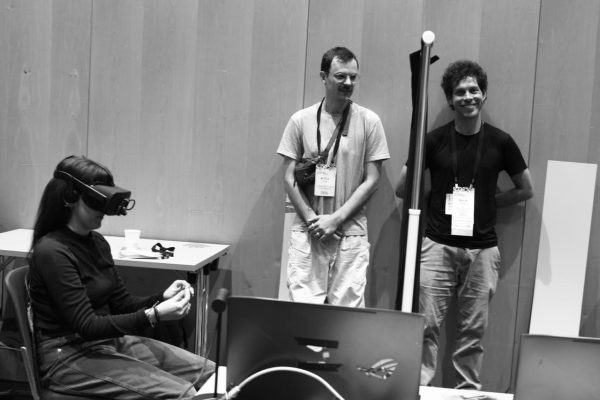
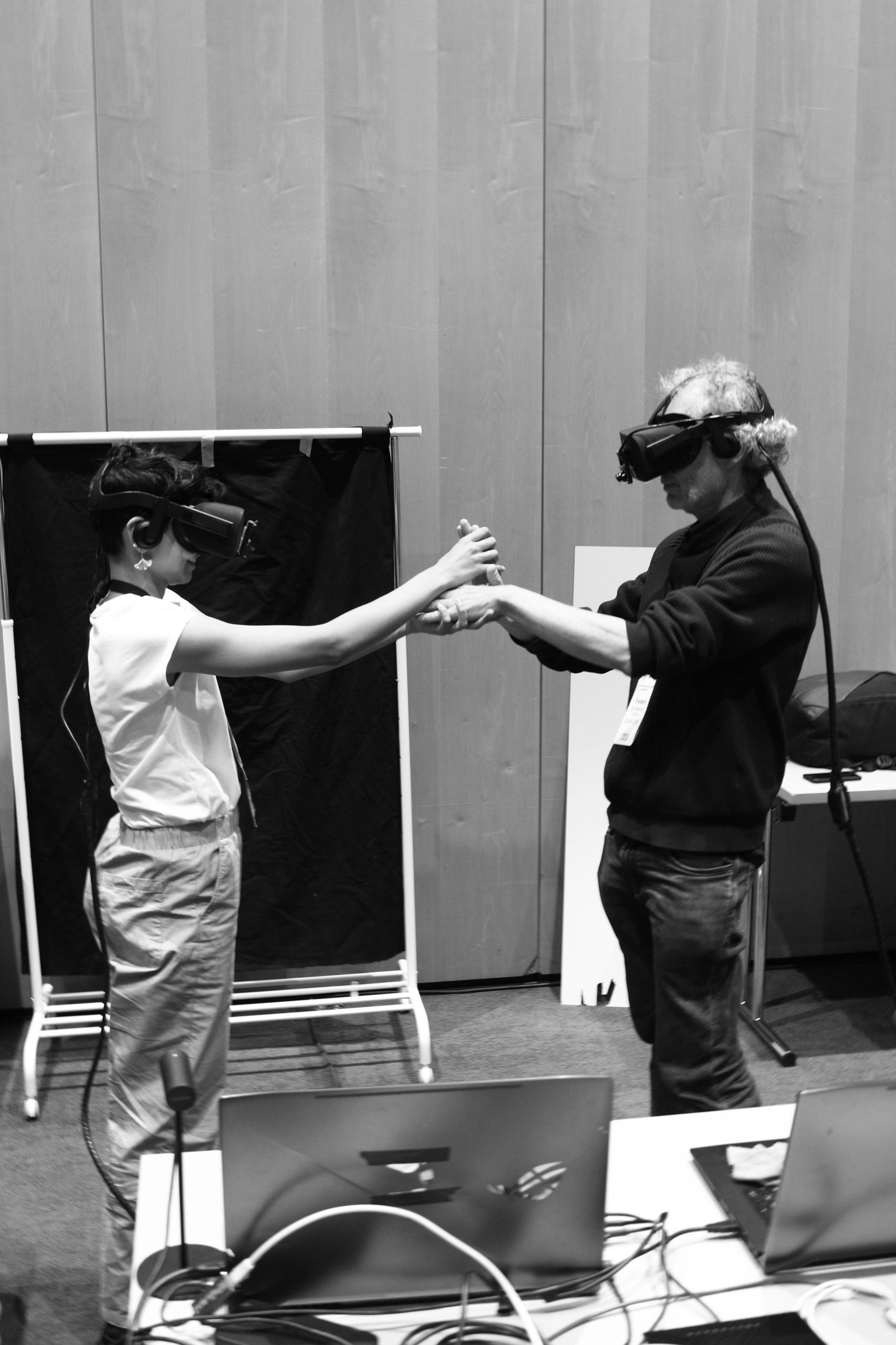
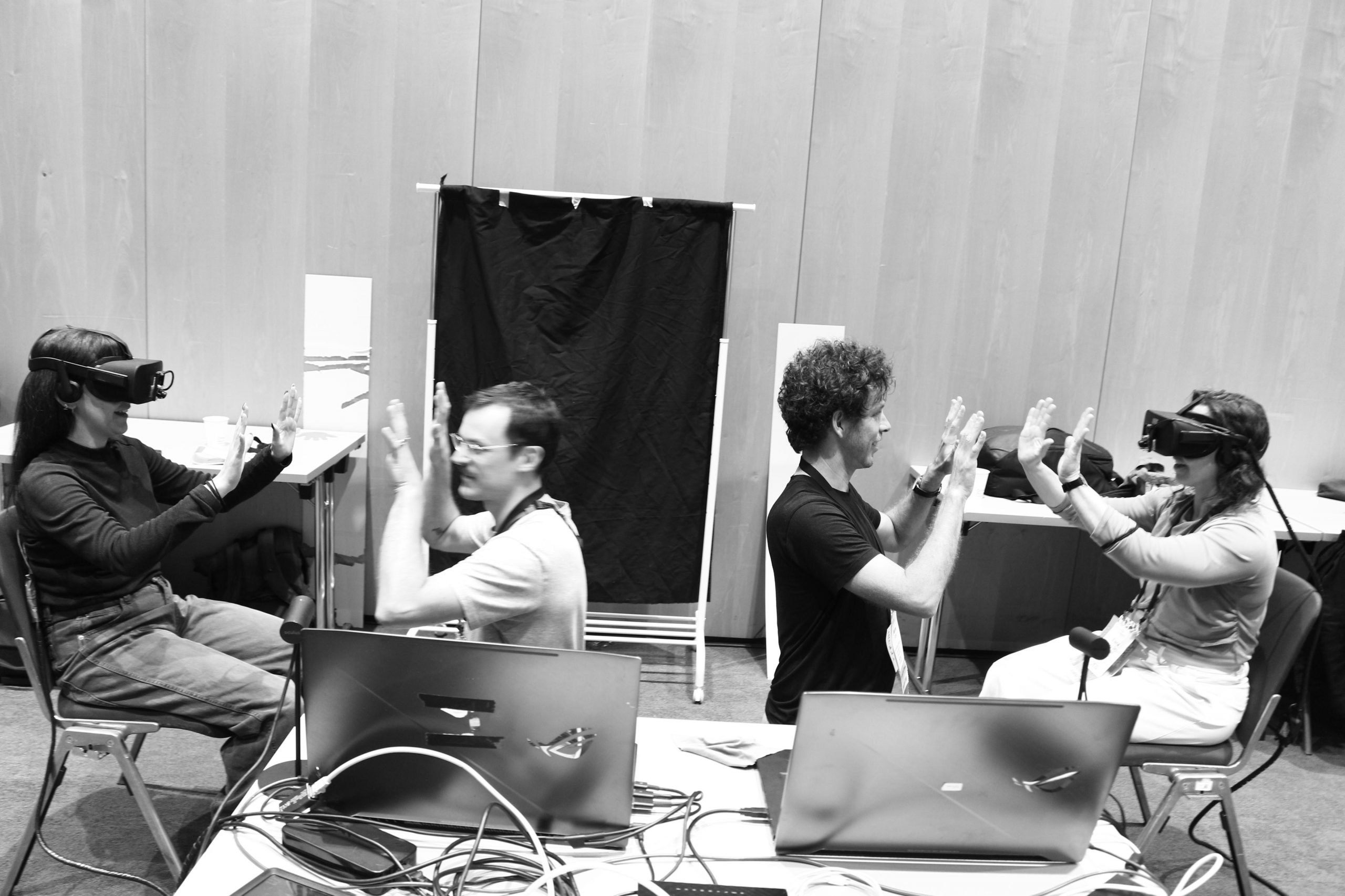
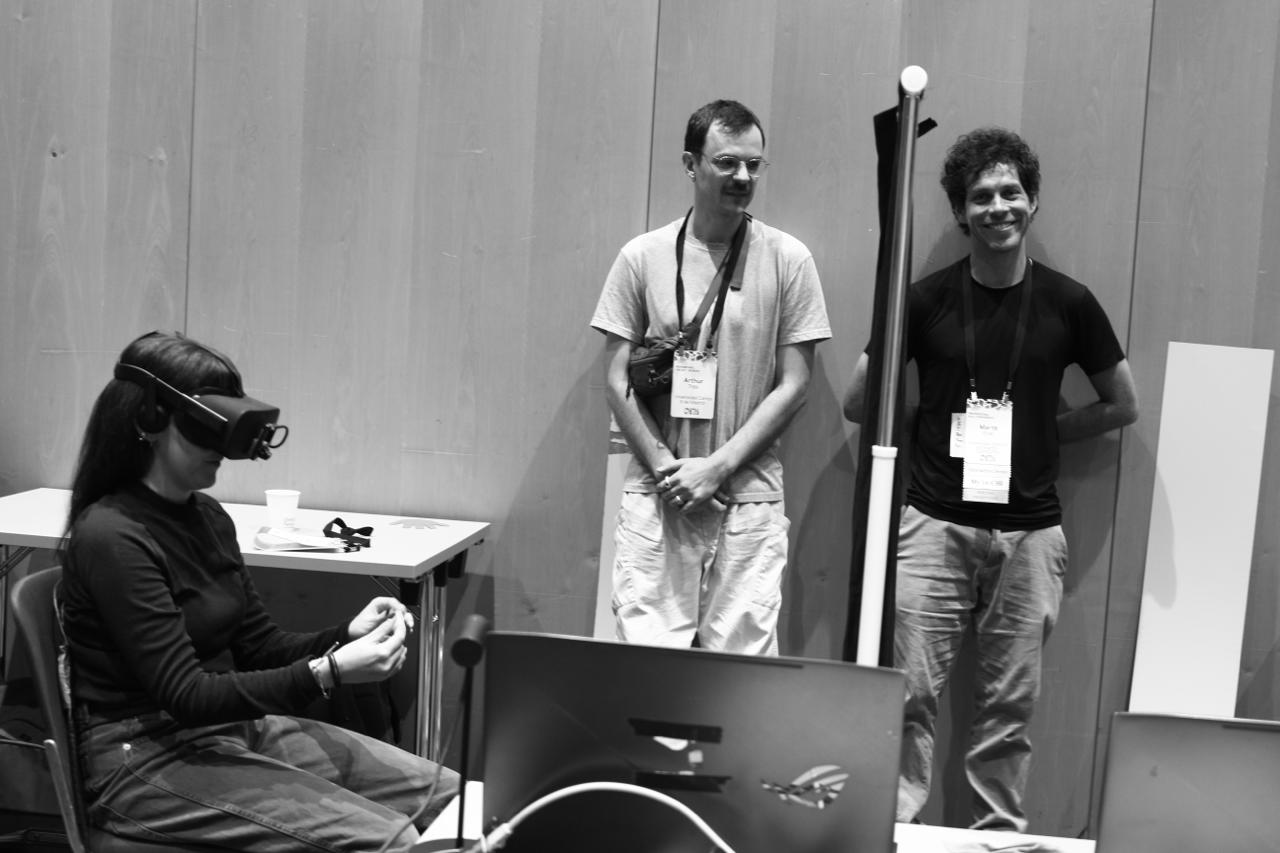
We had some very inspiring few days at ACM CHI Conference 2026 in Barcelona.
It was exciting to see the field of Body Transformation Experiences so vibrant, with such varied and rich perspectives on what makes transformation-oriented research and technology meaningful, appropriate, and useful. For us, a particularly strong thread running through the workshop was the questioning of overly complex technological setups, and a renewed focus on what actually makes these experiences memorable and transformative over time (hint: it’s not about putting a VR headset on every single day). It was also a real joy to see how much The Machine to Be Another still resonates after more than ten years, with both new and seasoned HCI researchers giddily lighting up during the experience.
At the core of our workshop contribution is the role of facilitation and care in shaping Body Transformation Experiences. In The Machine to Be Another, facilitation is not an external layer added to a technical system, but an essential part of how embodiment is made possible. Facilitators actively guide interaction, support emotional and bodily safety, and sustain the subtle coordination required for shared embodiment to emerge. This shifts the focus away from technology as the sole driver of experience, toward a model where agency is continuously negotiated between participants, facilitators, and the system itself.
This perspective is grounded in our long-term, in-the-wild practice with TMBA since 2012, across museums, public spaces, and research contexts. Our upcoming workshop paper expands on these themes, reflecting on how relational embodiment, human facilitation, and sustained real-world deployment challenge more technocentric approaches to immersive design. We look forward to sharing it soon, and to continuing to contribute to conversations on Body Transformation Experiences that remain grounded in lived, situated, and socially embedded practice.
Thank you to Elena Márquez Segura and Ana Tajadura-Jimenez for involving us in it, and Mel SlaterKia Höök Pedro Lopes, and Kristi Kuuk for the thought-provoking insights. We look forward to continue taking part in the conversations shaping the field in the future.